The mistakeis trying to be convincing.
Persuasion is the instinct, and it is the wrong instrument. A leader who feels persuaded has been moved by you. A leader who feels clear has been moved by the situation, and only the second one holds up when you are not in the room.
This matters more than it sounds, because most proposals are decided somewhere other than the meeting where they are presented. Your manager takes it to their manager. A budget holder discusses it with a peer. What travels is not your delivery. It is whether the logic survives being repeated by someone less invested than you.
So the question is not how to be more compelling. It is what this person would need in order to explain your idea accurately to someone else, and defend it.
Your boss may need to carry the proposal to the next level. Help them answer the questions they will be asked when you are not there.
Why the Journey avoids the word pitch
Leaders generally do not want to feel they are being sold a new idea, especially when sponsoring it puts their credibility, resources and reputation at stake. A pitch asks someone to be convinced. Enrollment asks them to see something clearly enough to back it, which is a different transaction and a more durable one.
The central question a leader is answering is rarely "is this interesting?" It is "do I trust enough to change?"
Trust grows when leaders can follow the logic and believe the recommendation is grounded in reality. Those are two separate things, and a proposal can pass one while failing the other.
The strongest proposal reduces uncertainty without pretending uncertainty has disappeared. Overclaiming is not confidence. It is the fastest way to lose the second conversation.
Clarity and believability
Clarity
Can I understand it?
The problem, the root cause, the recommendation, the expected impact and the path forward.
- Structured logic
- Clear definitions
- Visible connection to priorities
- A focused ask
Believability
Do I believe it?
That the work is complete enough, the evidence sound enough, the team capable enough, and the risks understood enough.
- Evidence and perspective
- Alternatives considered
- Transparent assumptions
- Realistic execution
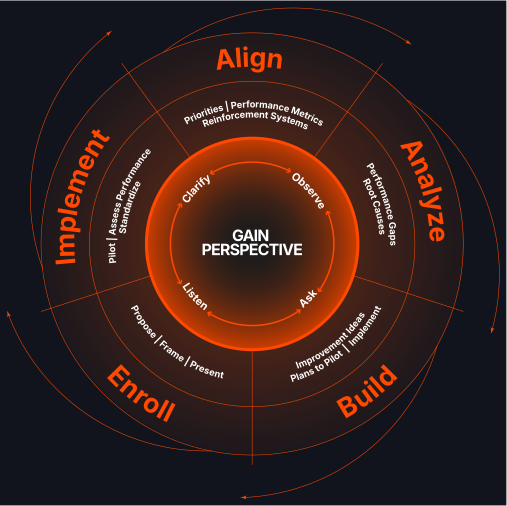
In practice this happens through three moves: propose, frame and present. Together they allow leaders to see the opportunity, trust the work and the team, feel confident enough to act, and be inspired to sponsor it.
One proposal. Different listening.
People evaluate the same idea through the responsibilities they carry. The facts do not change from listener to listener. What changes is which part of the truth answers the question that person is actually asking.
CEO
Strategic fit, growth, competitive advantage, enterprise risk.
CFO
Investment, return, cash flow, downside, and the cost of inaction.
COO
Operational feasibility, capacity, sequencing, ownership.
People and HR
Skills, workload, behavior change, fairness, adoption.
Customer and brand
Experience, trust, reputation, consistency.
Legal and compliance
Obligations, controls, exposure, documentation.
It makes the full value and full consequence of the idea visible to each listener. The facts remain consistent. The emphasis reflects the responsibility of the person listening.
And one thing people forget. Your boss may need to carry the proposal to the next level. Help them answer the questions they will be asked when you are not in the room.
A worked example: a customer-service pilot
The recommendation stays the same. The frame changes with the listener.
Invest $250,000 in a six-month proactive service pilot for high-risk accounts. The goal is to reduce churn and improve renewal revenue.
Nothing in those four statements contradicts another. Each one answers the question that listener is responsible for answering. Framing helps each of them see the same new way from the responsibility they must honor.
Propose. Frame. Present.
Three moves, and most people collapse them into one.
Proposing is the substance: what you are recommending, what it addresses, what it will cost, what happens next. It should be legible on paper without you narrating it, because at some point it will have to be.
Framing is deciding which part of the truth answers the question this particular listener is responsible for. Not a different set of facts. A different entry point into the same set.
Presenting is the conversation itself, which is mostly listening. The proposals that get sponsored are usually the ones where the person hearing it got to shape something before agreeing to it, even something small.
Leaders see the opportunity, trust the work and the team, feel confident enough to act, and are inspired to sponsor it. Any one of those missing and the answer is usually "let's revisit this next quarter."
Signals it is not landing
- Questions about the format rather than the substance
- Agreement in principle with no next step attached
- A request for more data when the data is not the doubt
- Referral to a committee that does not meet soon
Each of those usually means clarity or believability is missing somewhere, and the useful response is to ask which rather than to send more material.
Starbucks, 2008: ten thousand store managers in New Orleans
Transformation requires people to see themselves in the new way, not merely receive instructions about it. In 2008 Starbucks brought 10,000 store managers together in New Orleans. The gathering reconnected leaders to coffee, community, service and their own role in the transformation, and made the change visible as a shared leadership responsibility.
The strategy was translated into a human story: restore what made Starbucks distinctive, reconnect partners to the craft and the mission, and give store leaders a role in bringing the experience back to life. The gathering did not replace the operating plan. It created meaning and ownership around it.
Read from the public record. Starbucks did not use or endorse this framework, and the case mapping is interpretive rather than a causal claim.
The scale is unusual. The principle is not. Enrollment is what turns a plan people have been told about into a change people can see themselves inside.
Common questions
- What does Enroll mean in the Intrapreneurship Journey?
- Enroll is the fourth Dimension. It means sharing a new way so clearly and credibly that others can see a better future and trust it enough to act. It deliberately avoids the language of the pitch.
- What is the difference between enrolling and pitching?
- A pitch asks someone to be convinced. Enrollment gives them enough clarity and believability to back the idea themselves. Leaders rarely want to feel sold to, particularly when sponsoring an idea puts their credibility and resources at stake.
- Is framing an idea differently for different people dishonest?
- No, provided the facts stay consistent. Strong framing makes the full value and full consequence of the idea visible to each listener, with the emphasis reflecting the responsibility that person carries. What changes is emphasis, not truth.
- What makes a proposal believable?
- Evidence and perspective, alternatives considered, transparent assumptions, and realistic execution. The strongest proposal reduces uncertainty without pretending uncertainty has disappeared.