 By
Office politics is how influence, resources and recognition actually move through an organization, beyond the org chart. Much of it is people responding to what they want and to what the organization measures and rewards. You cannot sit it out, but you can take part with integrity: understand what drives the behavior around you, build relationships, choose when and how to raise difficult things, and never lie or change the facts. When harmful behavior becomes a pattern, it is no longer normal politics, and it deserves to be named.
In this article
- The CEO I told what he wanted to hear
- What is considered office politics?
- What are examples of politics in the workplace?
- Can I just stay out of it?
- How to play the office politics game?
- How do I build support without it looking political?
- How to deal with bad office politics?
- What are the biggest mistakes people make about office politics?
- How to navigate office politics with integrity
- Try it before your next difficult conversation
I have not always held that line myself.
The CEO I told what he wanted to hear
I think being genuine is one of the most valuable things you can offer someone: to be you fully around them. I also know that this is easier to say than to do.
There have been moments when, to keep my reputation in good standing with a CEO, I said things I knew he would agree with, even though I did not really agree with them myself. I wanted to please people. The pressure to stay on someone’s good side is real.
There have also been moments when I said what I actually felt, challenged a leader’s view, and was appreciated for it. Leaders have told me that they were surrounded by people saying yes because they wanted to stay on their good side. They valued having someone who would say no or challenge them when they were wrong.
That has paid off for me. So I believe in being yourself, and I also believe in being strategic.
What is considered office politics?
I try not to be surprised by how people act.
People want to grow, make money, sometimes make more money, have more influence, and look good in front of others. Those motivations show up at work. Sometimes people start playing a game around how things look to those in power and to their colleagues. The name of that game is politics, and at times it can feel like there are very few rules.
Much of it also comes from the organization itself. As our For Professionals page puts it, “Most professionals are taught how to perform their roles. Far fewer are taught how change actually moves through an organization.” Deb Liu writes in her newsletter, Perspectives, that so much of what we call office politics “is the result of our limited perceptions and conflicting incentives.”[1]
In our framework, this is the territory of Align. Our guide describes it as understanding what is important to leaders, how they are performing against their targets, and “the reinforcement systems that drive behavior.” Reinforcement systems simply means what is rewarded, recognized, or discouraged. If a team is measured only on speed, do not be surprised when it resists an idea that slows it down, however good the idea is.
Free guide
Get the free framework
Download our 12-page guide to The Intrapreneurship Journey and explore an approach to developing ideas and building support at work.
Download the free frameworkWhat are examples of politics in the workplace?
Some examples are harmful. From my own experience: drama, talking behind people’s backs, trying to mobilize others to take a side, and telling a leader what they want to hear to stay on their good side.
Others are ordinary, and most of them come back to priorities and incentives. The first two are illustrative, not from a specific organization. The third is a real example from Deb Liu:
- Illustrative: the hallway decision. A proposal is effectively decided in conversations before the meeting, because the people involved talked to the decision maker first. It feels political to whoever was not in those conversations.
- Illustrative: the competing metric. Two departments block each other’s projects. Neither is acting in bad faith. Each is protecting the number it is measured on.
- The well-connected colleague. Deb Liu describes a colleague who others felt was always playing politics. He was well-connected and knew what was happening, because he would speak to a large number of people “to understand the general sentiment and get support for his ideas.”[1]
The last example is worth noticing. What looked political from the outside was a person doing the work of understanding others before asking them for anything.
Can I just stay out of it?
Not really. Harvard Business Review’s article on this has a title that says it plainly: “You Can’t Sit Out Office Politics.”[2] Decisions about your work, your ideas and your role are being shaped by these dynamics whether you take part or not.
Staying out also has a cost to the contribution you want to make. As our For Professionals page says, “What matters is that you see possibilities, care enough to contribute, and are willing to understand the organization, not only criticize it.”
Taking part does not mean picking a side straight away. You do not always need to jump into a camp immediately. You can listen, understand the different perspectives, and help people see where they share something. There may eventually be a moment when you need to take a side. I want that choice to be grounded in what I believe is right, the values I stand for, and the people and work I want to support.
How to play the office politics game?
Be yourself, and be strategic about it. You need to think about when and how you open a difficult discussion. There may be a better time, a better setting, or a more useful way to give the feedback. Choosing that moment gives you room to be honest and thoughtful about how the conversation lands.
You also need to manage your emotions and think long term, not just short term. What are you trying to help happen? What does the other person need to understand? What would make this conversation useful?
I think we need to strategically design conversations. Sometimes we share every detail of an event, and the conversation gets pulled away from what actually needs attention. There are many angles from which people can look at something, even something you have done well.
You can choose to lead with an angle that helps people understand the alignment, the analysis, how the idea was built, and what you are asking them to support. That is part of framing and of what our framework calls Enroll: helping people understand a recommendation, trust it, and choose to support it.
Where I draw the line
The line I want to hold is this: I would not lie or be disingenuous, because you lose trust.
Yes, I would withhold information in the sense of choosing what is relevant, what is appropriate to share, and when to share it. I would not change the information. And I would not leave out a fact that someone needs in order to understand the situation or make an informed decision.
An irrelevant detail can wait. A significant risk, cost, or problem belongs in the conversation.
You can be thoughtful about what you share and still be honest. You can build relationships, understand people’s priorities, and make a strong case while giving others credit and allowing people to disagree.
For me, influence has to be something I can stand behind afterward. I want to help good work move forward and still recognize myself in how I did it.
How do I build support without it looking political?
Do openly what the well-connected colleague did: talk to people before you ask them for anything, and let what they tell you change the idea. Start with your manager, then the people whose responsibilities the idea touches. I wrote about how to find them in who to involve first when building support.
What separates this from the harmful kind of politics is how you do it. You are open about what you are trying to do. You give credit to the people who shaped the idea. You bring people into the thinking rather than working around them. Our For Professionals page puts the aim this way: “It is to become influential because you help the right things move.”
How to deal with bad office politics?
Start by telling the difference between discomfort and harm. A disagreement or an uncomfortable conversation does not automatically make an environment toxic. But when harmful behavior becomes a pattern, we need to take it seriously.
For me, warning signs of toxicity include the environment taking a toll on your mental health, physical health, and emotions. You start dreading seeing a particular person. You hate going to work. You spend more energy protecting yourself from people than contributing to the work.
I can understand the pressures behind that behavior, but I also stand for values: fairness, kindness, and respect. When people break those values and we keep accepting it, we set a precedent. We start teaching each other that this is how things work here. At some point, we need to open up the cards and talk about what is happening and what kind of environment allows us to work at our best.
What I did when a team divided
I experienced this at Ashoka during a period of deep division over the organization’s direction. A new team had formed, and from my perspective, some of the changes felt like an overhaul of our original focus on social entrepreneurship.
There was resistance, fighting between teams, and misunderstanding. People developed harsh feelings toward one another. There was drama, talking behind people’s backs, and trying to mobilize others to take a side.
When that happened, I tried to be a unifying force. I organized a couple of events where colleagues could discuss these tensions. I set ground rules for having the discussions in a healthy way. I did not involve the CEO in those conversations. I brought teammates together to talk with one another.
We started finding common ground, and that was helpful. It did not mean every disagreement disappeared, but it created room for a different kind of conversation.
Use it to build your Intrapreneurship Journey muscles
Start by Gaining Perspective. Is this normal here? What in the system encourages this behavior? What gets rewarded? What happens when someone challenges it? Is this the culture we want to keep creating?
Then consider what you could help change. It might begin with a conversation, a shared agreement, or a better way for teams to work through disagreement.
But there are limits. You cannot carry the responsibility for repairing an unhealthy organization by yourself. If the behavior continues, speaking up is unsafe, or the environment keeps taking a toll on you, you may need support and a plan for your next step.
What are the biggest mistakes people make about office politics?
- Blaming people without looking at the system. When my framework stalled at Ashoka, as I wrote in what intrapreneurship is and why it matters, “At the time, I thought it was only their fault.” Look at what the people involved are measured and rewarded for first.
- Telling leaders only what they want to hear. It protects your standing for a while and costs you trust.
- Picking a camp too early. Listen first. Understand the perspectives before you take a side.
- Sharing every detail, or the wrong one. Lead with what helps people understand the decision.
- Leaving out a fact someone needs. Choosing what is relevant is fair. Hiding a significant risk, cost, or problem is not.
- Accepting harmful behavior until it becomes “how things work here.” That is how a precedent is set.
- Trying to fix an unhealthy organization alone. Bring people together, and get support when you need it.
How to navigate office politics with integrity
- Find out what gets measured and rewarded. For the people your work depends on, learn their priorities, their targets, and what they are recognized for.
- Assume pressure before bad intent. Ask what is pushing someone to act as they do before you decide what kind of person they are.
- Design the conversation. Decide what you want to help happen, what the other person needs to understand, and when and where to raise it.
- Share what matters, and never change the facts. Leave out the irrelevant. Keep in every significant risk, cost, or problem.
- Name patterns, not people. When harmful behavior repeats, help people talk about it with ground rules, and know when you need support.
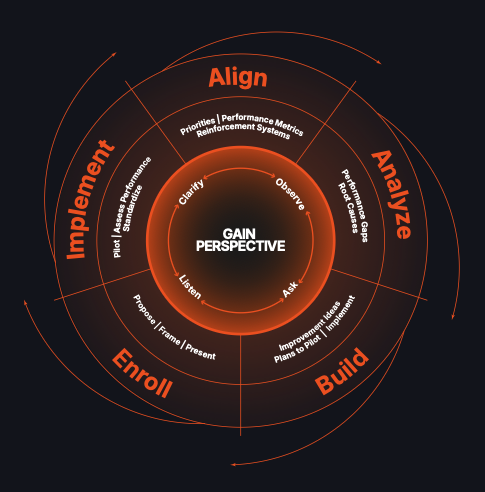
These steps follow The Intrapreneurship Journey, the framework Brent Martini and I developed. Gaining Perspective sits at the center and continues across five connected dimensions. In Align, we connect the idea to organizational priorities, metrics, and what gets rewarded. In Analyze, we work to understand the performance gap and its root causes. In Build, we develop options with others and consider the value, resources, and risks involved. In Enroll, we help the people whose support we need understand the recommendation and have confidence in it. In Implement, we put the idea into practice, assess what happens, and adapt.
Try it before your next difficult conversation
Before your next conversation where something sensitive is at stake, write down three things: what you are trying to help happen, what the other person needs to understand, and which facts they need in order to make an informed decision.
Then have the conversation, leading with the angle that helps them understand. Afterward, note how it landed, and whether you would stand behind how you handled it.